
Key Takeaways
- Not every state in the 50 state license plates landscape is equal: some have layers of requirements that can delay a deal by weeks if handled incorrectly.
- California, Hawaii, New York, Colorado, Illinois, and Massachusetts consistently rank among the most complex states for out-of-state titling.
- Understanding each state’s unique DMV requirements, inspection rules, and fee structures is essential for dealerships selling beyond their home market.
Why Out-of-State Titling Is Not the Same Everywhere
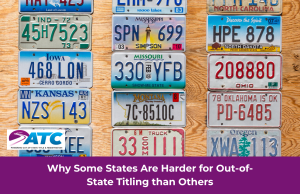
Out-of-state vehicle sales have surged in recent years, with out-of-state registration and title transactions growing by 80% over the past five years. For dealerships, that growth is a significant revenue opportunity. But the moment a vehicle crosses a state line, the complexity of 50 state license plates and registration requirements comes into sharp focus. Every state has its own DMV rules, fee structures, required documentation, and processing timelines. Some states are relatively straightforward. Others are not.
The states that create the most difficulty tend to share a few traits: strict emissions or safety inspection requirements, unique documentation demands, complex fee calculations, or bureaucratic processes that are slow to accommodate out-of-state transactions. For title desks managing high volumes of out-of-state deals, knowing which states are most likely to create problems is the first step toward preventing them.
What Separates the Hard States from the Easy Ones
Before diving into the specific states, it helps to understand the categories of complexity that make out-of-state vehicle title processing difficult.
Emissions and Safety Inspections. Some states require vehicles to pass a state-specific emissions or safety inspection before a title can be issued. This creates a burden when the buyer and the vehicle are both located out of state at the time of sale.
Unique Documentation Requirements. Certain states require forms that are state-specific and unfamiliar to out-of-state dealerships. Missing or incorrectly completed documents can send a file back to square one.
Complex Fee Calculations. Fee structures vary dramatically by state and sometimes by county within a state. Errors in fee calculation are one of the leading causes of delays in out-of-state title processing.
Slow or Fragmented Bureaucracy. Some states simply have DMV systems that are slower, require more in-person steps, or route files through multiple agencies before a title is issued.
50 State License Plates, Ranked: The States That Create the Most Challenges
While difficulty can vary depending on the specifics of a transaction, the following states appear consistently at the top of the list for out-of-state titling complexity.
California
California is widely regarded as one of the most demanding states for out-of-state vehicle title and registration. The California Air Resources Board (CARB) enforces emissions standards that exceed federal requirements, and vehicles must meet those standards to be registered in the state. Out-of-state dealerships selling to California buyers need to account for smog certification, VIN verification requirements, and a fee structure that is both intricate and subject to change. Errors are costly and common, and the DMV timelines can stretch well beyond what dealers or buyers expect. Plus crackdowns on the “Montana Loophole” are causing many to pay extra attention.
Hawaii
Hawaii presents challenges that no other state does: it is the only U.S. state that is not connected to the continental road network. Shipping a vehicle to Hawaii adds time and cost to any transaction, and the state requires a county-level safety inspection before registration can be completed. The inspection must happen in Hawaii, which means the process cannot be finalized until the vehicle is physically in the state. That alone makes timelines unpredictable and difficult to manage remotely.
New York
New York has some of the most stringent DMV requirements in the country. Out-of-state dealers must navigate both state-level and sometimes county-level requirements, and documentation standards are exacting. New York also requires emissions inspections for most vehicles, and the penalty for registration errors or lapses can be significant. The sheer volume of transactions processed through New York’s DMV systems also means that processing times are not always predictable.
Colorado
Colorado may not be the first state that comes to mind when dealers think about difficult out-of-state titling, but it has earned its place on this list. The state uses a county-based registration system, which means fees and requirements can vary depending on where the buyer lives. Colorado also requires emissions testing in certain counties along the Front Range, and out-of-state vehicles must meet those standards before registration is issued. Add in Colorado’s specific requirements around late fees, temporary permits, and the handling of out-of-state liens, and the margin for error is narrower than many dealers expect.
Massachusetts
The Massachusetts Registry of Motor Vehicles (RMV) operates under its own set of rules that are distinctly different from most other states. The state requires a safety inspection before a registration can be issued and has documentation requirements that many out-of-state dealerships are simply not familiar with. The RMV’s online systems, while improved in recent years, still require careful handling of out-of-state transactions, and processing timelines can be longer than expected when files are incomplete.
Illinois
Illinois adds complexity through its combination of state and county-level fee structures. Cook County in particular has fee requirements that differ from the rest of the state, and misapplying fees is a frequent mistake in out-of-state titling. Illinois also has specific requirements around the release of liens and the documentation needed for title transfers, and the state’s processing timelines can be inconsistent.
How to Handle the Hardest States for Out-of-State Titling
The most effective strategy for managing high-complexity states is to build the knowledge before the deal closes, not after. That means knowing each state’s requirements at the point of sale, calculating fees accurately upfront, and ensuring that every required document is gathered correctly the first time.
For dealerships handling a significant volume of out-of-state vehicle registration transactions, maintaining that knowledge internally is a significant operational burden. Fee structures change. Documentation requirements shift. DMV systems update. Staying current across all 50 states requires ongoing attention that most title desks are not resourced to provide.
This is precisely where dealer titling services become essential. Working with a specialist in out-of-state title processing means having access to up-to-date, state-specific requirements for every jurisdiction and DMV, accurate fee calculations, and a team that knows what California, Hawaii, New York, and the other high-complexity states need before a file is ever submitted. For dealerships growing their out-of-state sales volume, that expertise is not a luxury. It is a practical necessity for protecting customer relationships and keeping deals on track.
Frequently Asked Questions
Which states are the hardest for out-of-state vehicle titling?
California, Hawaii, New York, Colorado, Massachusetts, and Illinois consistently rank as the most complex states for out-of-state title and registration. Each presents unique challenges including emissions requirements, inspection mandates, complex fee structures, or demanding documentation standards.
Why does California make out-of-state titling so difficult?
California’s CARB emissions standards are stricter than federal requirements, and the state mandates smog certification and VIN verification for out-of-state vehicles. Combined with a complex fee calculation system and high transaction volume through the DMV, California requires precise, up-to-date knowledge to process correctly.
What is the biggest source of errors in out-of-state title processing?
Incorrect or incomplete documentation and fee calculation errors are the most common causes of delays and rejections. These mistakes are especially frequent in high-complexity states where requirements are unique or frequently updated, which is why accurate, real-time data is critical for DMV compliance for dealerships processing out-of-state transactions.
Can a dealership handle all 50 state license plates and registrations internally?
It is possible, but it is resource-intensive. Maintaining accurate, current knowledge of fee structures, documentation requirements, and DMV processes across all 50 states requires dedicated expertise and ongoing updates. Many dealerships with significant out-of-state sales volume find that partnering with a specialized processor is more efficient and less error-prone than managing it in-house.
How long does out-of-state title processing take in difficult states?
Timelines vary considerably by state and by the accuracy of the submission. In states like California and New York, processing times can range from several weeks to over a month when inspections are required or when documentation errors cause a file to be rejected and resubmitted. Working with an experienced processor who submits complete, accurate files the first time is the most reliable way to minimize delays.
Automotive Titling Company (ATC) has been simplifying out-of-state title and registration processing for dealerships across the country for more than 30 years. To learn how ATC can support your title desk, visit autotitling.com.